
If you want to know how to clean a basement floor, it is important to learn the essentials. This includes decluttering, sweeping or vacuuming, scrubbing, removing residue, and drying. The details depend on what is under your feet, so identify your floor type first.
Basement floors collect dust, dirt, mud, debris, stains, pet hair, and moisture-related residue. Unfinished concrete needs a slightly different approach from sealed or painted concrete, vinyl, or tile. The wrong method can leave streaks, damage a finish, or keep the floor damp for days.
This Squeaky Cleaning guide covers supplies, preparation, the cleaning process, stain removal, drying, and maintenance.
What You Need to Clean a Basement Floor
Basic Cleaning Supplies
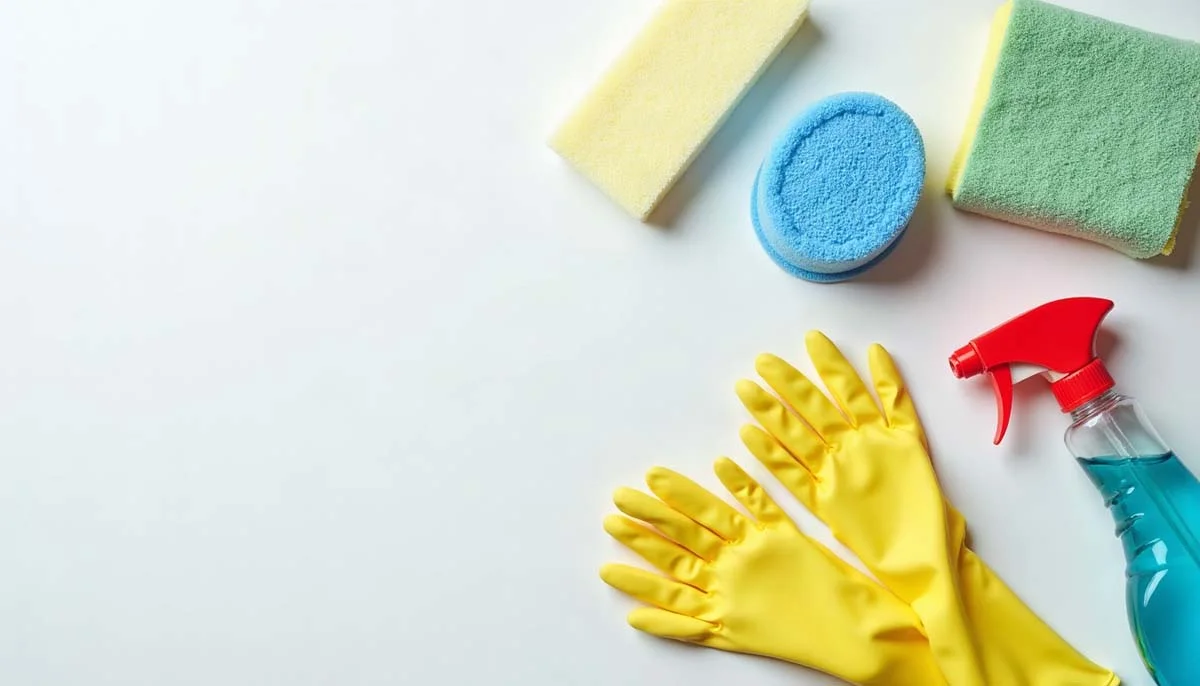
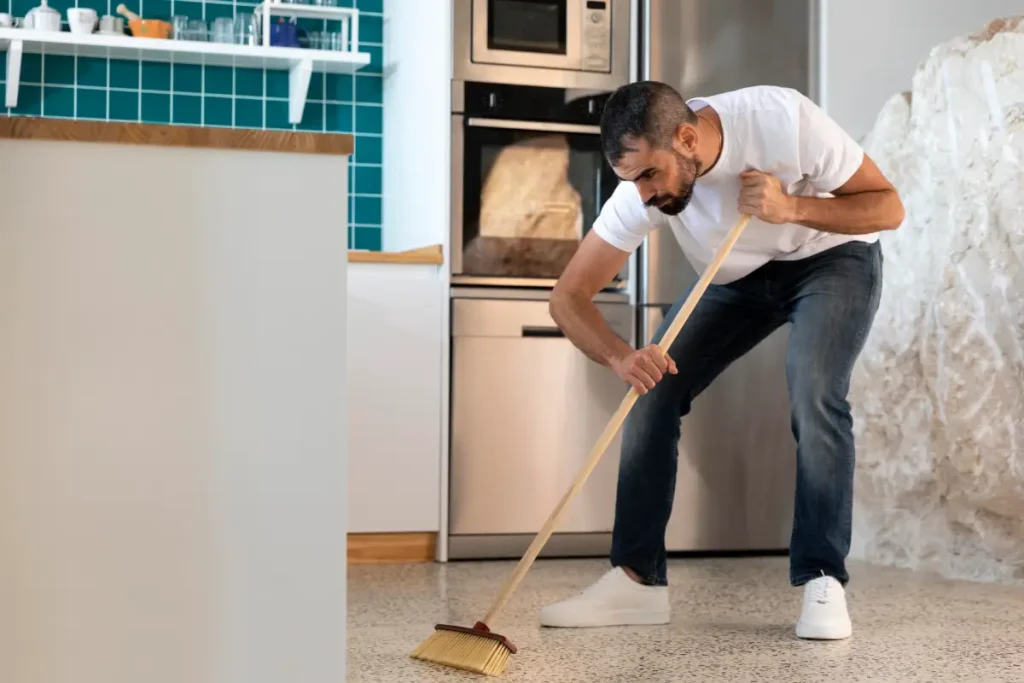
- Broom or dust mop: Sweeps up loose dirt and debris which can turn into mud when mixed with water.
- A vacuum suited to your flooring: A shop vacuum suits concrete, while vinyl and tile need a hard-floor setting.
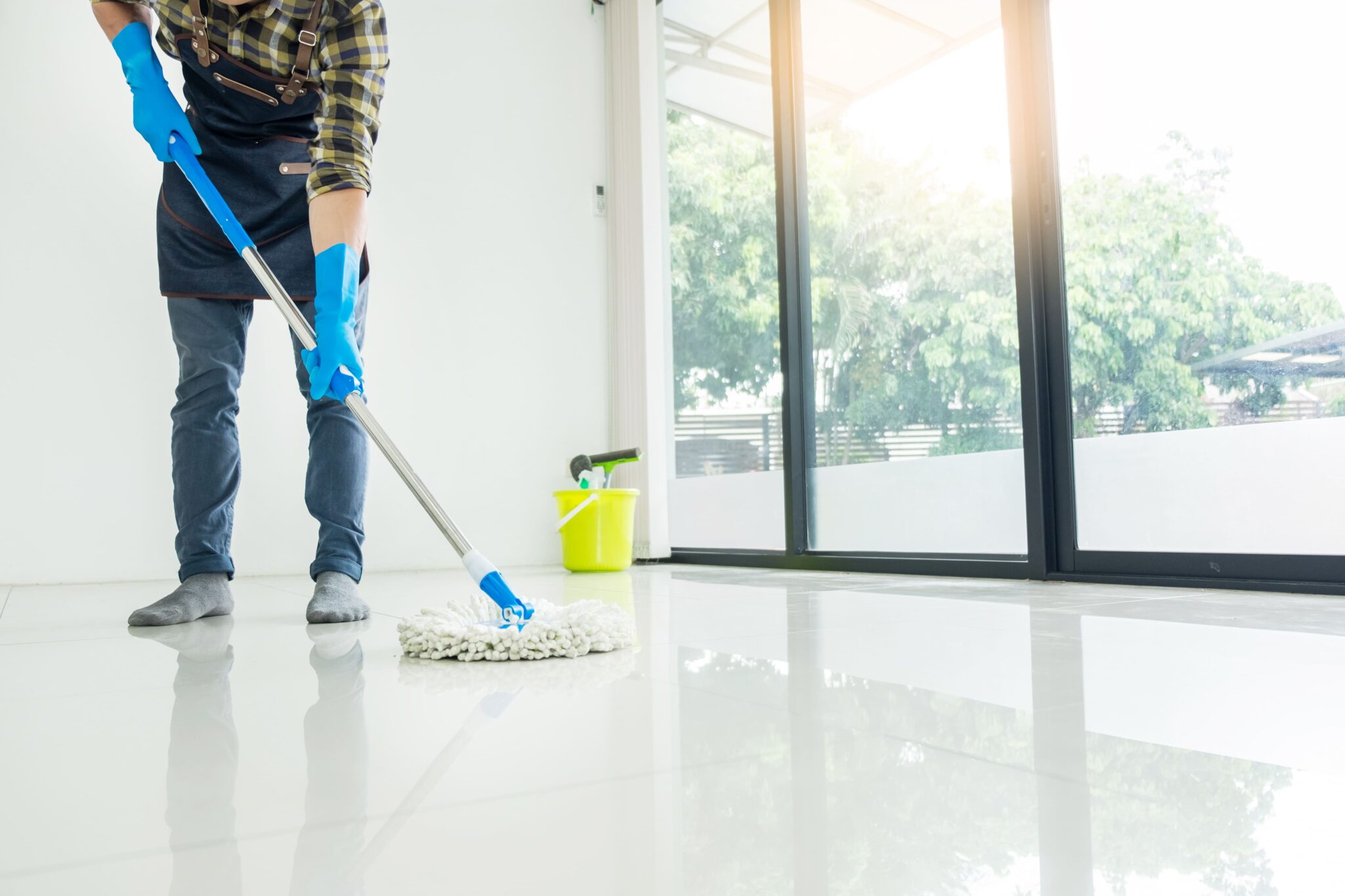
- Mop and bucket: A flat microfiber mop wrings out easily, helping you control how much water reaches the floor.
- Scrub brush: Lifts ground-in dirt from textured surfaces and stubborn spots that a mop leaves behind.
- Microfiber cloths: Handy for wiping edges, picking up leftover residue, and drying small areas quickly.
- An appropriate floor cleaner: Basement floor cleaners vary widely, so choose based on your flooring material and the manufacturer’s recommendations.
- Clean water: Change as often as you need to avoid spreading grime back onto the floor.
- Gloves: Protect your hands from cleaning solutions, dirty water, and rough surfaces while you scrub.
No single product is safe for every surface, so match the cleaner to the floor rather than reaching for the strongest option.
Cleaning Tools for Tougher Basement Floors
For heavily soiled concrete, a stiff-bristle brush on a long handle lifts dirt from the surface texture better than a mop. Routine residential cleaning does not call for heavy equipment, which can wear down coatings or roughen a surface.
Prepare the Basement Before Cleaning the Floor
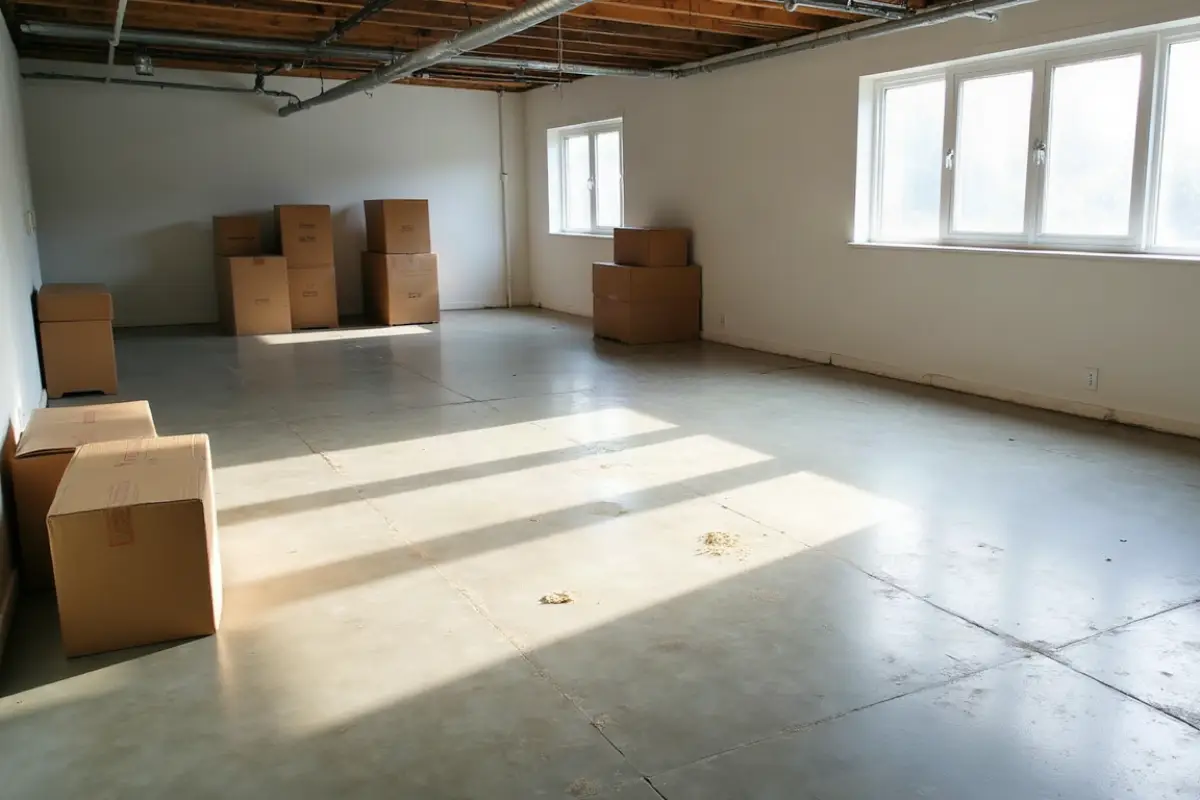
Knowing how to clean a basement properly starts before any water comes out.
- Remove items from the floor: boxes, furniture, containers, and rugs.
- Check for standing water or visible moisture: If water is entering the space, deal with that first.
- Sweep or vacuum loose dirt and debris: Loose grit turns into muddy residue once water is added.
- Identify stains and problem areas: This will allow you to focus on treating them deliberately.
- Check for mold or persistent dampness. The EPA’s guide to mold and moisture explains why moisture control is the key to mold control.
- Ventilate when appropriate. Open a window or run a fan to help the floor dry and keep cleaning agent fumes from building up.
- Keep electrical cords and equipment away from wet areas: Water and electricity are a dangerous mix, so keep cords, fans, and tools clear of damp floors.
Consider wearing closed-toe shoes with good grip, since wet concrete and tile can be slippery.
How to Clean a Basement Floor Step by Step
1. Remove Loose Dirt and Debris
Sweep or vacuum the whole floor, working from the far corner toward the exit. Pay attention to corners, edges along walls, around and under stairs, under shelving, and around appliances or storage areas.
2. Choose the Right Basement Floor Cleaner
Match the cleaner to the material and finish. A stronger chemical does not automatically give better results. Harsh products can discolor surfaces, damage sealers, and leave residue.
- Read the label and follow the dilution directions exactly.
- Test any new cleaner on a hidden spot first.
- Never mix cleaning products. The CDC’s guidance on cleaning and disinfecting with bleach says household bleach should never be mixed with other cleaners or disinfectants.
3. Mop or Scrub the Floor
Work in sections a few feet wide rather than getting the whole basement wet at once. A damp mop is enough for light dirt. On concrete with built-up grime, a scrub brush works better than a mop because the bristles reach into the texture.
4. Remove Cleaning Residue
Leftover cleaner can leave a sticky film that attracts dirt. Follow the product instructions on rinsing, using a well-wrung mop and fresh water or a wet vacuum to pick up excess liquid.
5. Let the Basement Floor Dry Completely
Basements have less airflow and often higher humidity, so floors stay damp longer than you would expect. Open windows, run fans, and consider a dehumidifier. The EPA’s mold house tour suggests a dehumidifier for a too-humid basement and indoor humidity below 60%, ideally 30% to 50%. Do not put back furniture, boxes, rugs, or storage containers until the floor is fully dry, since they trap moisture underneath.
How to Clean an Unfinished Concrete Basement Floor
If you want to learn how to clean a concrete basement floor, the first thing you need to know is whether the floor is bare or coated. Unfinished concrete is porous, so it holds onto dust, dirt, spills, stains, and moisture, and it can soak up the cleaning solution.
- Remove loose debris by sweeping, then vacuuming.
- Use a cleaner made for concrete, diluted as directed. Stronger is not automatically better.
- Work in small sections so the solution never dries on the floor.
- Scrub areas with accumulated dirt with a stiff-bristle brush.
- Remove excess solution with a well-wrung mop or wet vacuum.
- Let the concrete dry thoroughly. It can feel dry on top while still holding moisture below.
Why not soak it? Heavy water use can leave concrete damp for a long time and push dirt deeper instead of lifting it out.
Unfinished and sealed concrete are not the same. If your concrete has a sealer, paint, or coating, follow the coating manufacturer’s cleaning recommendations instead.
How to Clean Different Types of Basement Floors
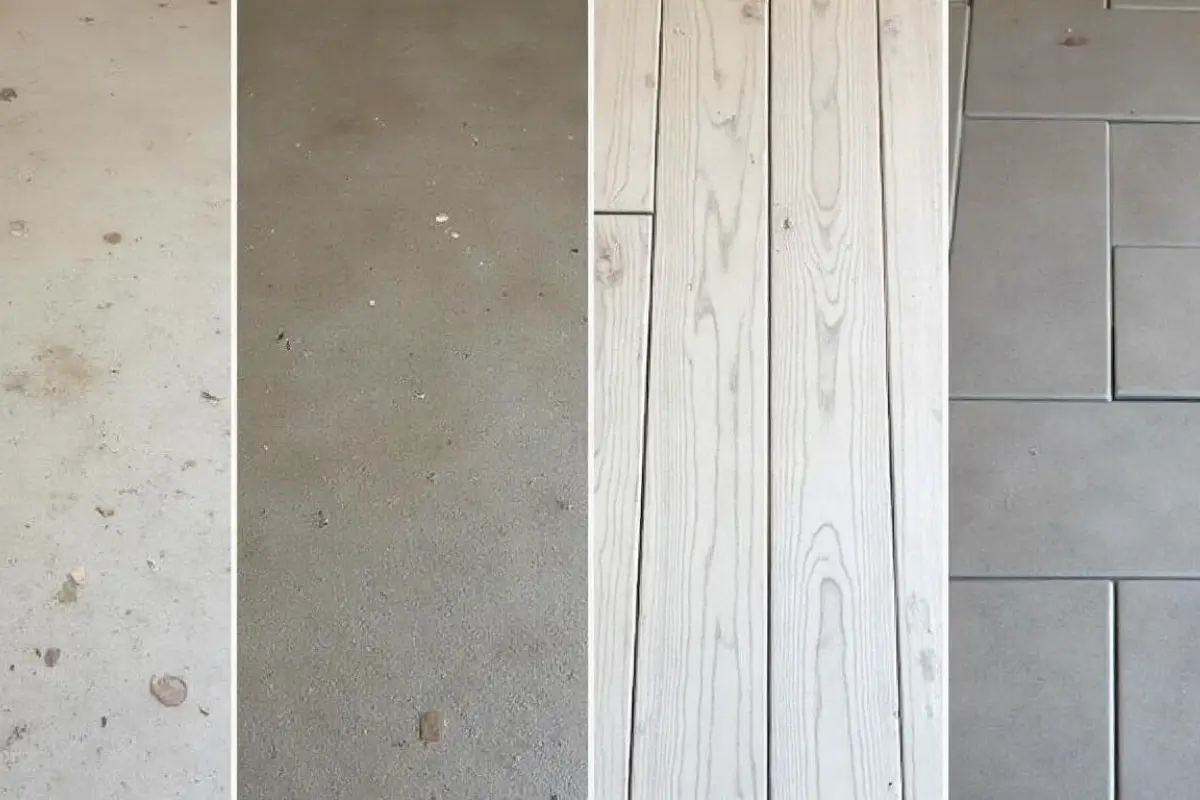
Unfinished Concrete
Sweep, use a concrete-appropriate solution, control moisture, scrub dirty areas, and dry thoroughly.
Sealed or Painted Concrete
The finish determines which cleaners and tools are safe. Harsh chemicals and abrasive scrubbers can dull or strip a sealer or paint. Check the coating instructions and start with a soft mop and mild cleaner
Vinyl Flooring
Follow the manufacturer’s cleaning instructions. Avoid prolonged soaking with abrasives, and strong solvents that can dull the surface or damage seams.
Tile Basement Floors
Tile is durable, but porous grout holds dirt and may need a soft-bristle brush. Make sure the cleaner suits both tile and grout. Use gentler products on natural stone.
How to Remove Common Basement Floor Dirt and Stains
The right treatment depends on the stain and the floor material. No single product can handle everything.
- Mud and tracked-in dirt: Let it dry, sweep or vacuum it up, then clean. Wiping wet mud will only spread it.
- Dust buildup: Use a dust mop or vacuum to remove dust instead of just pushing them around.
- General grime: A suitable cleaner and sectional scrubbing usually works on common types of grime.
- Water marks: Cleaning may lighten them, but marks that keep returning means there is a source of moisture that needs to be addressed.
- Food or beverage spills: Clean them using a mild solution before they go deeper into porous concrete.
- Pet-related messes: Remove the mess physically, then use a pet-odor cleaner suited to your floor. Perfumes will only cover the smell and will not address the cause.
- Stubborn stains on concrete: Scrub with a stiff brush and a product intended for that specific stain (such as oil or rust). Test a hidden spot first and never combine products.
Mold and Musty Areas
Visible mold or a persistent musty smell can signal an underlying moisture issue, such as a leak, condensation, or high humidity. Wiping surfaces may help temporarily but will not fix the cause.
For small areas of surface mold, see our article on 10 Ways To Get Rid of Mold Naturally. Furthermore, visit the EPA’s page on mold cleanup in your home for larger areas. If mold is extensive or keeps returning, the moisture source needs attention, which may call for a qualified remediation or water-damage specialist.
How Often Should You Clean a Basement Floor?
There is no universal schedule. Frequency depends on how often the basement is used, whether it is finished, pets, storage activity, foot traffic, dust, moisture, and the season.
Routine cleaning
Routine cleaning means regular sweeping or vacuuming and occasional mopping. This covers monthly sweeps in a storage basement to weekly vacuuming in a family space with pets and kids.
Deeper cleaning
Deep cleaning addresses accumulated grime, stains, neglected areas, or the whole basement after a long gap.
Not sure where one ends and the other begins? Check out our article comparing regular house cleaning vs. deep cleaning for more guidance on the topic. To keep the whole house on a schedule, recurring cleaning is another option.
When a Basement Floor Needs More Than Routine Cleaning
A sweep-and-mop routine may not be enough when you see:
- Heavy dirt buildup or a long-neglected floor
- Persistent stains
- Significant dust accumulation
- Difficult-to-reach areas
- A large basement
- A move-in or move-out cleaning, including basement storage areas in apartment and condo buildings
- A broader project to deep clean the basement beyond the floor
If several apply, the job has likely outgrown a quick mop-over. Our article explaining what a deep cleaning is provides further guidance.
Basement Floor Cleaning Mistakes to Avoid
Using Too Much Water
Excess water is especially risky on unfinished concrete and in slow-drying basements. Use a damp mop and work in sections. Always keep electrical equipment away from wet areas when working on similar tasks.
Choosing a Cleaner Without Checking the Floor
A cleaner that works on bare concrete may dull a sealer or damage vinyl. Check the label and flooring guidance first.
Skipping Drying
A floor that looks dry can still hold moisture, inviting odors and trapping dampness under items you put back too soon.
Cleaning Around Moisture Problems Without Addressing the Cause
Cleaning alone will not solve recurring dampness, leaks, or mold. The source has to be identified and corrected.
Mixing Cleaning Products
Never mix cleaning chemicals unless the product directions specifically say it is safe. Basements often have limited ventilation, so use one product at a time.
If you are unsure about a step, or the job is turning out harder than expected, it is fine to ask for help. The range of Squeaky Cleaning Services includes options for homes that need extra hands.
Basement Floor Cleaning Checklist
- Remove furniture and stored items
- Check for standing water or moisture
- Sweep or vacuum loose debris
- Identify stains and problem areas
- Choose a cleaner appropriate for the floor
- Clean the floor in manageable sections
- Scrub stubborn areas when appropriate
- Remove excess cleaner and residue
- Allow the floor to dry completely
- Replace furniture and storage items
- Address recurring moisture or mold concerns
When to Consider Professional Cleaning

Professional cleaning services may be worth considering when the basement has been neglected for a long time, the floor has extensive buildup, the space is large or hard to clean, you want a deeper clean, the job extends beyond the floor, or you lack the time or equipment.
If cleaning the basement floor is part of a larger home-cleaning project, Squeaky Cleaning offers residential cleaning that can cover surrounding areas as well.
Cleaning is not a substitute for water-damage repair or mold remediation. If your basement has ongoing moisture, leaks, or extensive mold, contact a specialist who handles those problems.