

When was the last time you looked closely at your ceiling? Dust and cobwebs can build up on ceilings and other hard-to-reach areas without being noticed. Regular overhead dusting can help keep these areas clean and reduce visible dust buildup. That is why you should add overhead dusting to your recurring cleaning routine.
If you are wondering how to clean a ceiling, the best method depends entirely on your ceiling material and its condition. Most surfaces simply need a dry dusting first. Afterward, you can perform careful spot cleaning with minimal moisture.
Always check manufacturer recommendations before applying water. Using the wrong tools risks peeling delicate paint or causing water damage, but following safe steps protects your home. You can always rely on professional cleaning services if you need extra help.
What You Need to Clean a Ceiling
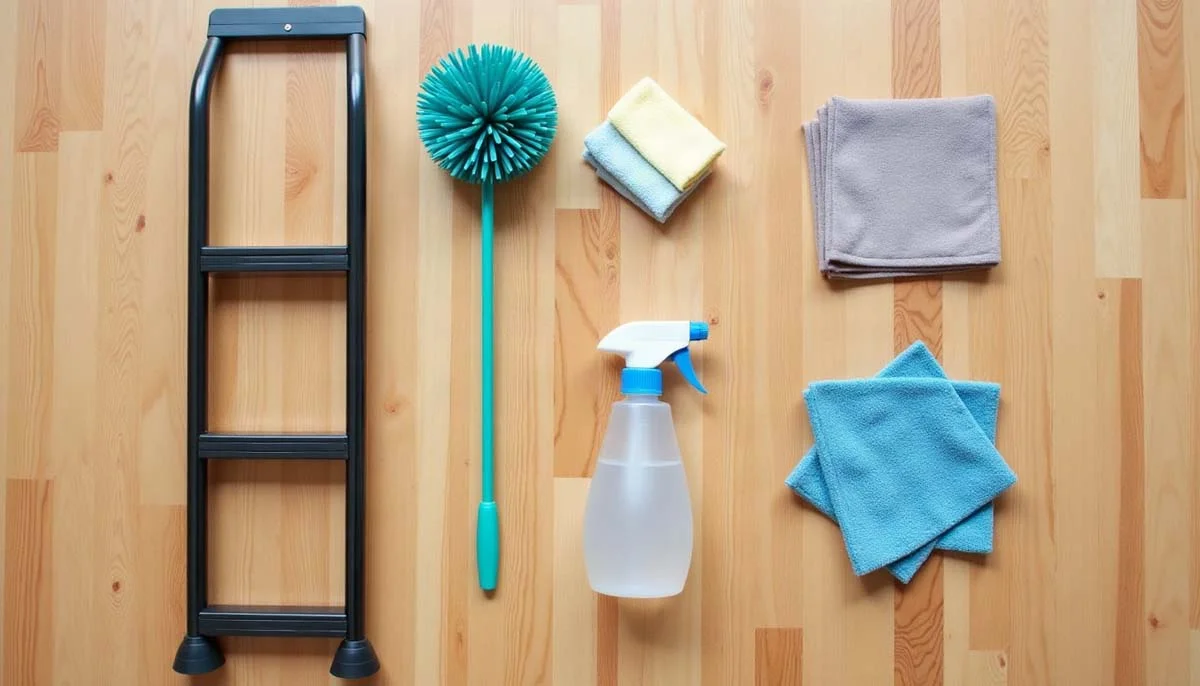
Preparing proper equipment prevents ladder falls and stops dirty runoff from dripping onto your floors. The exact ceiling cleaning tools you need depend on your room height and whether your surface is painted, textured, or tiled.
Here is what you should prepare:
- Microfiber duster: Excellent for trapping dry dust.
- Extendable duster: Essential for reaching high corners safely.
- Vacuum cleaner: Use a soft bristle attachment for textured areas.
- Microfiber cloths: Perfect for gentle damp cleaning.
- Soft sponge: Useful for spot-cleaning painted drywall.
- Bucket and cleaning solution: Use a mild cleaning solution that is appropriate for your ceiling surface.
- Step ladder: Always use a stable ladder instead of standing on chairs.
How to Clean a Ceiling Step by Step
Following a proper procedure protects your finishes and ensures good results. These simple steps work well for standard maintenance.
1. Identify the ceiling surface
You must determine your ceiling material before you apply any water. Smooth painted, textured, drop ceiling, and acoustic materials all have strict moisture limitations. Knowing exactly what you are working with dictates whether you need a dry duster or a damp sponge.
2. Remove loose ceiling dust
You must begin with dry cleaning to prevent spreading wet dirt around. If you want to know how to get dust off ceiling surfaces safely, use an extendable duster or a vacuum with a soft bristle attachment and work gently. Wear eye protection if dust or debris may fall toward your face, and avoid disturbing any suspected mold or hazardous material.
3. Spot-test before wet cleaning
Testing an inconspicuous area first helps you check how the surface reacts before cleaning a larger area. Moisture can easily ruin flat paint, special finishes, and delicate acoustic materials. Apply a tiny amount of mild soapy water in a corner to ensure no paint discoloration or water rings form.
4. Clean the surface gently
For surfaces that tolerate moisture, use a gentle approach with a barely damp microfiber cloth. We strictly warn against using excessive water and saturating drywall or acoustic tiles. You should mix a few drops of clear, mild dish soap into warm water, avoiding dyed cleaners that can permanently stain the material. Keep your interior spaces well-ventilated, and run exhaust fans to maintain indoor humidity while the surface dries.
5. Address visible stains
You need to separate general everyday dirt from specific stains like grease or water marks. Your approach depends completely on the cause of the stain, and some marks may require repainting rather than washing. For stubborn marks on painted ceilings, you can create a simple paste of baking soda and warm water to rub the spot gently.
If you find significant mold growth or mold affecting porous materials such as drywall, avoid treating it as a normal cleaning task. The affected material may need professional assessment or replacement.
How to Clean Different Types of Ceilings
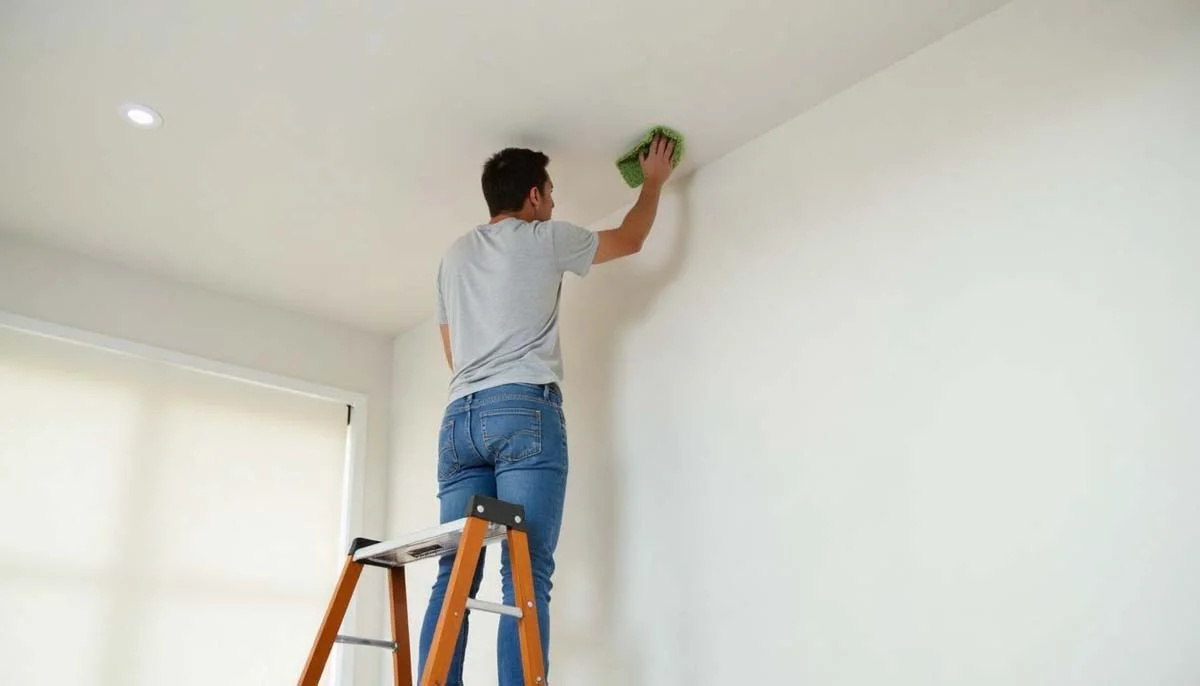
Water ruins some ceiling finishes within minutes, while other surfaces can safely handle light damp wiping. You must adjust your tools for washing ceilings based on whether the finish is porous, painted, or textured.
Smooth painted ceilings
Flat and matte latex paints scuff easily if you rub them with excessive friction. Always dust with an electrostatically charged microfiber cloth first, and if you have freshly painted flat latex paint, wait 14 days for the paint to cure before applying any damp cloth.
Textured ceilings
The best way to clean a textured ceiling involves minimal moisture and extremely gentle tools. You should rely on dry cleaning with a HEPA vacuum held one inch away to preserve the delicate bumps. If you suspect an older textured ceiling may contain asbestos, do not scrape, sand, or otherwise disturb the material. Have it assessed by a qualified professional before attempting more intensive cleaning.
Drop ceilings
Removable acoustic tiles need a completely different approach because wetting the core causes permanent structural sagging. Always vacuum the finished room-facing surface with a soft brush attachment, check the manufacturer’s instructions before wet-cleaning, use only clear detergents, and dry immediately with a clean white microfiber towel.
High ceilings
For high or difficult-to-reach ceilings, use an appropriate extension tool from a stable position and avoid overreaching. If safe access is not possible, consider hiring a professional.
When Should You Hire Professional Cleaning Services?
You do not always need to handle heavy maintenance on your own. Hiring professional house cleaning services makes sense for very high ceilings, large homes, extensive buildup, or difficult access points.
Professional cleaning may be useful when ceilings are difficult to reach, buildup is extensive, or you do not feel comfortable working at height.
Ceiling Cleaning vs. Deep Cleaning
Ceiling cleaning can be part of routine maintenance, while deep cleaning covers a wider range of hard-to-reach and often overlooked areas throughout the home.
When you compare regular house cleaning vs. deep cleaning, wiping down high corners usually falls under broader deep cleaning services. If you are wondering what is a deep cleaning, it generally targets neglected areas like high fixtures, baseboards, and window tracks.
Quick Ceiling Cleaning Checklist
Keep this reference handy before you begin your next chore. This list ensures you follow safe and proper procedures.
- Identify the ceiling material
- Check manufacturer/care instructions where applicable
- Remove loose dust
- Protect furniture and flooring
- Spot-test cleaning products
- Use minimal moisture where appropriate
- Clean visible stains carefully
- Avoid aggressive scrubbing on textured surfaces
- Use safe equipment for high ceilings
- Allow moisture-sensitive surfaces to dry appropriately
- Check for signs of moisture or mold
- Consider professional cleaning for difficult areas
Achieving a Clean and Dust-Free Ceiling
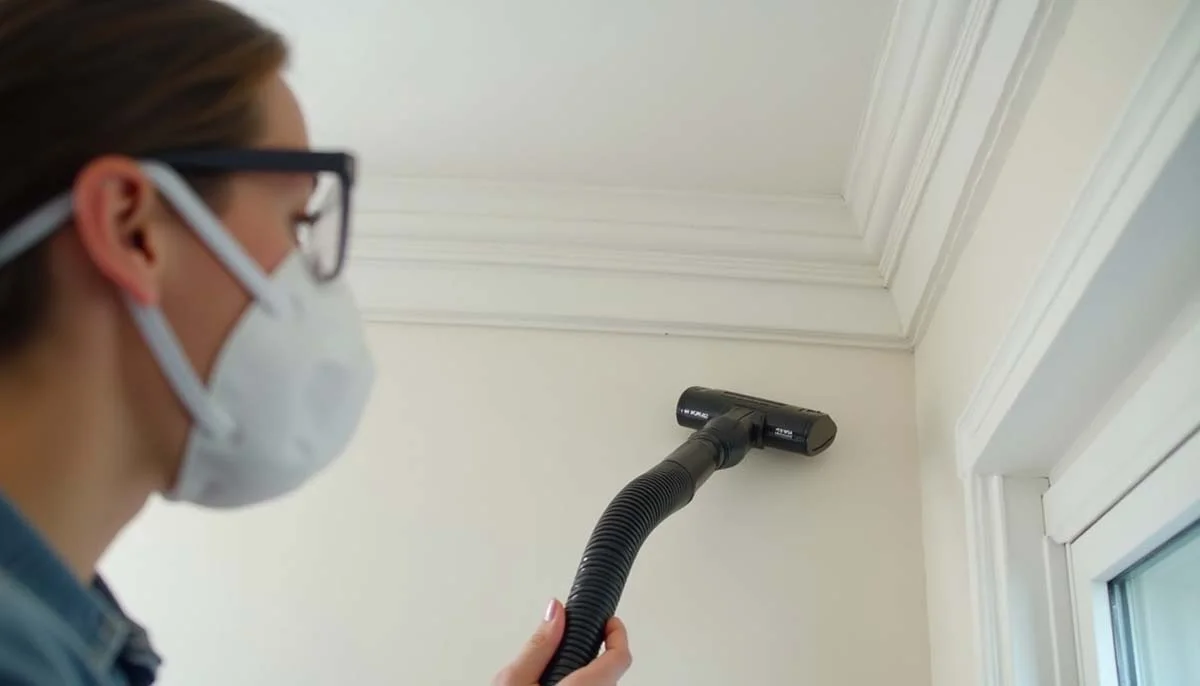
Clearing overhead dust prevents air contaminants from circulating and keeps your paint looking bright without expensive touch-ups. You should always start with dry dust removal and test your gentle soap carefully. Use minimal moisture, protect your floors, and prioritize safe ladder access.
Mastering how to clean a ceiling ensures your home stays fresh and inviting. If you face difficult areas, seek help from Squeaky Cleaning. Our team can help when you lack the proper safety equipment. You can book residential cleaning if you feel unsafe performing the work yourself.